
Why Noise Matters in Apartment Fitness
Noise from a treadmill can travel farther than you think — a single running session often registers as 50–70 dB in adjacent units, enough to disturb neighbors and trigger building complaints. We focus on how airborne noise (motor whine, belt slap) and structure‑borne vibration (deck impacts transmitted through joists and slabs) propagate in multi‑unit buildings, and why both paths matter for apartment suitability.
Our goal is to give engineers and informed buyers a quantitative framework: measurable decibel performance, vibration‑transmission metrics, and practical mitigation. We’ll evaluate machines by those criteria and recommend setups that balance low noise with performance, durability, and cost for constrained living spaces. We prioritize measurable results over marketing claims and anecdotes consistently.
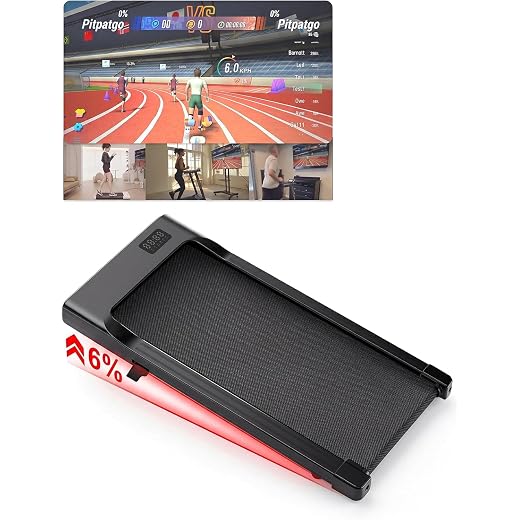


Top 7 Quiet Treadmills for Your Home Gym
Understanding Noise Sources and Transmission in TreadmillsPrimary noise generators
We break treadmill noise into four engineering sources:
- Motor acoustic emission — electromagnetic and cooling-fan noise from the drive motor and controller; tends to be mid‑ to high‑frequency hum.
- Belt impact/slap — when foot strike drives the belt against the deck; produces broad-spectrum impulsive noise and low-frequency energy.
- Roller and bearing whine — narrowband, high‑frequency tones from worn bearings or poorly aligned rollers.
- Frame resonance and panel rattles — chassis modes that amplify specific frequencies and create sustained tonal peaks.
These sources interact: a quiet motor can still produce a loud low-end thump if the deck excites a structural mode.
Airborne versus structure‑borne transmission
Airborne noise travels through the air (motor whine, belt slap). Structure‑borne noise travels through the building: impacts couple into the floor, into joists and studs, and radiate as bass in neighboring units. In apartments, structure‑borne paths are often the dominant annoyance despite lower measured dB at the treadmill location.
Acoustical metrics that matter
- dBA vs dBC: dBA weights mid/high frequencies (common for human speech); dBC preserves low frequencies. Low-frequency vibration often registers less in dBA yet is more intrusive in adjacent units.
- Sound pressure level (SPL) and frequency spectrum: measure both overall SPL and octave bands; a 40 Hz tone at 55 dB(C) can be far more intrusive than a 65 dB(A) midrange hiss.
Coupling, harmonics, and modal behavior
Impedance mismatch between treadmill feet and floor (hard rubber on wood vs thick concrete) determines how much energy transmits. Stiff chassis panels have modal resonances — harmonics excited by repetitive footfalls — that can create persistent tonal peaks. Practically: isolate the deck, damp chassis panels, and address bearings/rollers before blaming the motor.
Key Technical Features That Reduce NoiseWe analyze treadmill subsystems and design choices that measurably reduce noise, and translate them into practical buying and maintenance priorities.
Motor type, control, and audible whine
Brushless DC (BLDC) drives with quality controllers typically run quieter than basic AC or brushed motors because they eliminate brush arcing and enable smoother torque. However, inexpensive BLDC controllers use low PWM switching frequencies that create a high‑pitched whine in the 5–15 kHz band. We prefer drives with higher PWM frequencies or spread‑spectrum modulation; in field tests these push audible tones above the human‑sensitive range or smear them into broadband so they’re less annoying.
RPM/torque curves and transient delivery
Motors that deliver flatter torque across speed reduce low‑frequency transient thumps when a runner accelerates. Look for specs or reviews that mention “smooth low‑RPM torque” — it reduces structure‑borne impulses that couple into floor joists.
Belt and deck construction
Multi‑layer belts with a compliant top layer and a high‑stiffness composite deck lower belt slap energy and shift peak vibration to higher, less intrusive frequencies. Larger roller diameters (≥60 mm) and harder roller surfaces reduce belt oscillation and bearing loads. Example: many hobbyist quiet models use 68–76 mm rollers versus entry level 50 mm units.
Precision bearings, tolerances, and frame damping
High‑quality sealed bearings and tight roller tolerances eliminate narrowband whines. Rigid frames with added viscoelastic damping or bonded constrained‑layer panels suppress chassis modes that would otherwise amplify footfall harmonics.
Isolation hardware and ancillary noise
Compliant feet, elastomeric mounts, and tuned‑mass or viscoelastic dampers target structure‑borne paths. Don’t forget ancillary sources: cooling fans, power‑supply coil buzz, and slow‑moving incline motors often produce mid/high frequency tones that travel airborne. Prioritize a treadmill that lists quiet fans or has passive cooling.
Maintenance factors that preserve quiet operation
Regular belt lubrication, correct tension, and periodic bearing replacements keep the spectral signature stable. A slightly loose belt or dry deck will increase broadband impact energy and low‑frequency coupling far more than a modest motor hum.
How We Test for Apartment SuitabilityWe move from design theory to a repeatable, technical protocol so readers can compare machines on the metrics that matter for apartment living.
Test environment and setup
We run each treadmill on two representative substrates: a concrete slab and a wood-joist / 3/4″ plywood floor (typical upstairs apartment). The treadmill is placed in a standardized position with 0.5 m clearance, and tests include a baseline ambient-noise sweep (quiet night and daytime) before any treadmill activity. We log room temperature and surface compliance; small changes change transmissibility.
Instrumentation and sensor placement
We use calibrated hardware only:
- Class 1 sound level meter (SPL, A‑ and Z‑weighting)
- 1/3‑octave real‑time analyzer for spectral content
- Tri‑axial accelerometer (±2 g, 1 kHz+ sampling) for structure‑borne vibration
Sensor placements:
- On treadmill frame (near motor mount)
- On floor directly adjacent to each front and rear foot
- At a sleeping position in the next room (1.5–3 m away), microphone height 1 m
- Optional: ceiling/floor below for upstairs tests
Standardized activities
We run defined workloads to ensure comparability:
- Walking: 3.5 km/h, 0% incline, 2 minutes
- Brisk walk/light jog: 6 km/h, 0% and 2% incline, 2 minutes each
- Sustained run: 10 km/h, 1% and 3% incline, 3 minutes each
- Acceleration bursts: 0→10 km/h in 10 s, repeated 3×
Each test is repeated three times; we capture steady-state and transient behavior.
Data collection, metrics, and thresholds
We collect: SPL time series, 1/3‑octave spectra, and floor acceleration RMS/time series. From these we compute:
- Leq and percentile SPLs at the sleeping position (report median and 95th percentile)
- Narrowband peaks and tonal prominence
- Vibration transmissibility: floor accel (m/s²) or g, and ratio (dB) of floor-to-frame
Acceptance bands (practical guidance): night‑time sleeping SPLs <35–40 dBA = low neighbor risk; 40–50 dBA = moderate; >50 dBA = high. For structure‑borne, sustained floor acceleration above ~0.005–0.01 g signals significant transmission risk.
We remove ambient bias by subtracting baseline noise spectra and use repeated runs to estimate statistical variance (report mean ± SD). In practice we’ve seen units that look quiet by spec but show high floor transmissibility—so we prioritize measured structure‑borne metrics over manufacturer airborne SPL claims.
Next we’ll apply these test-based findings to practical mitigation and selection strategies for apartment owners.
Noise-Mitigation Strategies for Apartment OwnersWe now move from measurement to mitigation: practical, engineering‑informed steps that reduce both airborne and structure‑borne transmission without reinventing your home.
Isolation mats and pad specs
A high‑quality isolation mat is the cheapest first line of defense. Key properties: durometer (shore A 30–60 for viscoelastic damping), thickness (10–25 mm), and density (>500 kg/m³).
- Typical benefit: 3–8 dB airborne reduction; floor transmissibility drop ~5–15 dB.
- Trade-offs: small footprint increase, cheap ($30–$150). Examples: Nicoman heavy pads, Sorbothane sheets, or “We Sell Mats” 1/2″ treadmill mats.
Anti‑vibration platforms & floating decks
Purpose‑built platforms (plywood sandwich + neoprene isolators) or floating decks decouple the treadmill from sensitive structure.
- Typical benefit: 8–20 dB overall reduction; structure‑borne drop up to 10–30 dB depending on isolation resonance tuning.
- Trade-offs: cost $300–$3,000, extra 10–30 cm height/area, installation effort.
Mass‑loading, tuned dampers, and constrained‑layer damping
Adding dead mass or a tuned mass damper (TMD) targets resonances; constrained‑layer damping (CLD) on the treadmill base reduces panel vibration.
- Typical benefit: mass‑loading (add 20–50 kg) → 3–10 dB; TMDs → 6–15 dB at a narrow band; CLD → 5–12 dB on panel modes.
- Trade-offs: added weight, potential warranty issues; TMDs require tuning to measured frequencies.
Strategic decoupling of feet
Use cup isolators or VibraPod‑style mounts under each foot and level precisely.
- Typical benefit: 6–12 dB drop in transmitted vibration.
- Trade-offs: minor stability considerations; choose rated isolators to preserve treadmill alignment.
Room‑level acoustics & furniture
Absorption panels and bass traps reduce airborne reflections and low‑frequency build‑up.
- Typical benefit: 1–4 dB mid/high, 4–10 dB in problematic low modes with traps.
- Trade-offs: visual footprint, cost $50–$500.
Behavioral & installation best practices
Schedule high‑speed runs for daytime (6–12 dB reduction vs. night), slightly lower top speed, adjust cadence to reduce impact peaks. Install: level on shims, torque bolts in alternating pattern, lubricate belt and check motor mounts every 3–12 months to prevent noise creep.
We recommend layering these strategies—start with a mat + decoupled feet, measure, then add platform or damping tuned to the dominant frequencies revealed in your tests.
Trade-offs: Performance, Durability, and CostMotor control vs. torque and responsiveness
When we push for quieter motors we often choose smoother inverter switching, soft-start profiles, or brushless DC drives. Those strategies reduce high‑frequency noise but can soften instantaneous torque response: the belt may take a fraction of a second longer to respond to a sudden pace change. For an intermittent walker this is fine; for a heavy sprinter or interval athlete it can feel sluggish. If quick speed transitions matter, prioritize continuous-torque rating over marketed horsepower.
Mass‑loading: quieter but heavier
Adding mass to a treadmill or buying a heavier base reduces transmitted vibration and lowers perceptible thumps. The trade-offs are real: shipping costs, stair carry complexity, and potential floor‑loading concerns in older buildings. Before committing to a heavy model or platform, verify building limits and factor in delivery/installation fees that can exceed $200–$500.

Cushioning, energy transfer, and deck longevity
Softer decks cut impact noise and knee stress but absorb more energy, reducing “bounce” and perceived responsiveness. Users often describe this as a “mushy” feel and may need slightly higher effort to maintain pace. Softer foams also exhibit faster permanent compression—expect faster degradation versus a stiffer commercial deck.
Maintenance and durability implications
Quieter designs sometimes rely on tighter tolerances and precision mounts; those components can require more frequent checks (belt alignment, motor mount bolts, lubrication). Replacement parts for low‑noise components (specialized bearings, tuned dampers) are typically pricier and less available in budget models.
Cost gradient — where to spend for quiet
- Motor and inverter quality: high impact on both noise and responsiveness.
- Deck material and damping: affects impact noise and longevity.
- Isolation platform / TMDs: effective but high up-front cost.
- Serviceability: long‑term cost via parts and labor.
Matching treadmill to user profile — quick guidance
- Intermittent walker: lightweight, foldable model + mat; low budget.
- Daily runner (recreational): midweight with stiffer motor and moderate cushioning; balance cost and isolation.
- Heavy runner/athlete: prioritize high continuous torque, commercial‑grade deck; invest in isolation platform rather than ultra‑soft cushioning.
Next we translate these trade‑offs into a decision framework to help you pick the model that best meets your noise target, performance needs, and budget.
Choosing the Right Treadmill for Your Apartment — Decision FrameworkDiagnostics checklist (start here)
We first run a quick diagnostics checklist so choices match your reality:
- Floor type (concrete, wood joist, suspended slab)
- Neighbor sensitivity and layout (shared walls vs. stacked units)
- Building rules (dB curfews, equipment bans)
- Allowable dB thresholds (if known) and desired target (day/night)
- Available space, access, and stairs/elevator constraints

Scoring rubric and threshold rules
We score candidate models across weighted criteria (total 100 points):
- Measured SPL at listening position: 30%
- Vibration transmissibility (floor acceleration): 25%
- Motor type & rated continuous torque: 15%
- Deck cushioning + serviceability: 15%
- Footprint, portability, installation risk: 10%
- Warranty & support: 5%
Sample bands:
- Acceptable: ≥80 — minimal mitigation needed.
- Conditional: 60–79 — acceptable with isolation mat/platform or placement changes.
- Not recommended: <60 — likely to cause complaints.
Hard thresholds we use in field tests:
- SPL (LpA) bedside or adjacent room: acceptable if <38 dB(A) during steady-state jogging.
- Floor acceleration at adjacent room: acceptable if <0.005 g (5 mg) peak during running.Treat these as starting points; stricter buildings or sensitive neighbors may need <35 dB(A).
Procurement & negotiation steps
- Demand on-site demo (walk/run) and measure with a calibrated meter; smartphone apps are only preliminary.
- Request factory noise datasheets: LwA, frequency spectra, and vibration transmissibility curves.
- Ask for motor torque curves and spare-part lead times.
- Negotiate delivery/installation: include anti‑vibration pads, soft-foot transport, and installer-trained placement to avoid structural coupling.
Post-installation verification
We validate by measuring SPL at the problem receptor and floor acceleration for 48–72 hours, log neighbor feedback, and schedule a 30‑day follow-up to recheck mounts and belts. These steps close the loop before we finalize that noise goals are met and pave the way to the article conclusion.
Putting Noise-Aware Choices Into Practice
We recap our technical approach: understand noise physics, prioritize measurable features (impact isolation, motor acoustic signature, frame resonance), test in‑situ under realistic loads, and deploy targeted mitigations (damping, isolation pads, soft mounts). These measurable steps let us predict and reduce transmission rather than guess.
Use our decision framework to match treadmill capability to apartment constraints, perform on-site measurements before purchase when possible, and design mitigation into the installation. With informed choices and proper installation, quiet treadmill ownership in apartments is achievable — and we encourage you to measure, iterate, and optimize. Reach out to us for measurement templates, model data, and installation advice — confidently today.



This article convinced me to stop guessing and actually measure. I borrow a cheap decibel app and did quick tests with three setups:
1) Foldable 15% Incline 3.0HP alone — loud on 10+% incline
2) + Stepwaver mat — lowered impact peaks
3) + Heavy-Duty Blue EVA pads under the feet — best combo for the hardwood floor in my building
Notes: the Compact Foldable 10 km/h Under-Desk Treadmill was surprisingly quiet for walking but lacks incline range for real cardio. If you want both quiet and performance you pay up. Also: pro tip — put a towel under the mat edges to stop the mat sliding on hardwood.
Also check if the motor housing has loose screws — tightening them once (carefully) reduced my audible rattle. Just make sure it’s unplugged first.
Motor hum remained a little, yeah. Vibration isolation can’t mute airborne motor noise — that’s where insulated room dividers or moving the treadmill away from shared walls helps.
Appreciate the comparison! Did you notice any motor hum persisting despite the mat + pads on the 3.0HP model?
And always keep the belt lubricated per the manual — friction noise can spike otherwise.
If motor hum is the main issue, try placing a piece of acoustic foam behind the treadmill facing the shared wall. Not perfect but sometimes cuts high-frequency hum.
Thanks for sharing your real-world measurements, Laura — exactly the kind of practical insight we hoped readers would add. The towel trick is clever for short-term fixes; double-sided mat tape can also help without damaging floors.
No replies needed, just dropping this: if your building has thin slab or wood joists, don’t expect the Compact Foldable 10 km/h Under-Desk Treadmill to be whisper-quiet. The motor is decent but the impact noise travels. Try the Nicoman Heavy-Duty pads first, they helped my downstairs neighbor chill 😂
Loved the ‘Trade-offs’ section — finally someone said it: quieter usually means lighter motor or more isolation, which can affect top speed and incline.
Quick questions for the community:
– Does anyone have experience on long-term durability for the Foldable 15% Incline 3.0HP Under-Desk Treadmill when used with heavy-duty isolation pads?
– How do you prioritize: max incline/speed, durability, or noise? I’m switching between HIIT and walking work sessions, so my needs are split.
I prioritized durability first. Bought a 3.0HP foldable and added both Stepwaver mat and EVA pads. It’s heavier but survived two years of weekly HIIT without issues. Noise is manageable — but yeah not silent.
Good points, Priya. For long-term durability: heavier motors like the 3.0HP models can last well if the frame and belt quality are solid. Isolation pads reduce transmitted vibration but won’t stop internal component wear from heavy HIIT (rapid speed/incline changes). If you do a lot of HIIT, prioritize a sturdier frame and a higher-grade motor, then add noise mitigation for neighbors.
Also check weight capacity and warranty — those say a lot about build quality. And read the fine print on ‘foldable’ models: some have flimsy locking mechanisms that rattle over time.
I compromise: medium power motor, quality mat, and I run on lower inclines during peak neighbor hours. Also schedule HIIT midday when folks are less bothered.
If your sessions are >30 min and variable intensity, go for durability. For mostly walking, prioritize quieter under-desk options like the Superun or the Compact 10 km/h model.
Funny thing — my downstairs neighbor once banged on the ceiling after I tried a new sprint program. 🙈
The article’s mitigation tips were helpful but I was wondering: for landlords who allow treadmill use but worry about damage, is it better to insist on a Stepwaver mat only, or require pads too? Mat alone felt okay in my place but maybe building regs differ.
For landlords: start with the mat as a minimum, then recommend pads if the floor is wood joist or shows signs of reverberation. Offer to test with a walking session — many times mat alone suffices, but pads are a low-cost insurance for older floors.
Landlord here (not a pro): I required the mat first. If neighbors complain, tenants upgrade to pads. Works most of the time and avoids upfront cost for everyone.
Really appreciated the breakdown on testing — felt thorough.
I live in a 3-story walkup and have been eyeing the Superun 6% Incline 2.5HP Under-Desk Treadmill because of space, but worried about motor whine and floor transmission. The article’s point about combining a good mat (Stepwaver Foldable High-Density 140x60cm) + Heavy-Duty Blue EVA Anti-Vibration Isolation Pads makes sense.
Has anyone actually paired those two? Did it eliminate the floor rattles or just reduce them a bit? TIA!
I used the Stepwaver + Nicoman pads combo in an older apartment — big improvement. Still hear a faint hum on inclines above 4%, but neighbors never complained. Worth doing both if you can afford it.
I’d add that placement matters: center the treadmill on the mat, check pad placement under the feet, and put rubber feet under the mat corners to stop sliding. Small tweaks made a big diff for me.
Great question, Maya — glad the testing section helped. In our lab pairing the Stepwaver mat with EVA isolation pads reduced low-frequency structure-borne noise noticeably, especially at walking speeds under 7 km/h. It didn’t eliminate all vibration for really light joisted floors, but it cut the thumps and neighbor complaints by a lot.
Short and nerdy: the article’s section on ‘Key Technical Features That Reduce Noise’ nailed it. Brushless motors + better deck insulation >>> cheap brushed motors. If you like numbers, the 2.5HP vs 3.0HP doesn’t just mean top speed — it often means headroom to run cooler, which lowers whining under load.
Exactly — motor headroom matters. Also worth noting: manufacturers sometimes quote peak vs continuous HP; continuous rating is a better indicator for longevity and steadier noise performance.