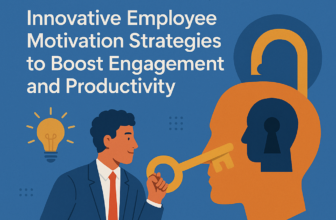
Empowering Excellence: 10 Proven Strategies to Keep Your Staff Motivated
Introduction
In today's fast-paced work environment, keeping staff motivated is crucial for organizational success. Motivated employees are more productive, engaged, and committed to their work. In this article, we will explore ten proven strategies to empower excellence within your team and maintain high levels of motivation.
Section 1: Understanding Employee Motivation
The Importance of Motivation
Motivation serves as the driving force behind employee performance. When staff members are motivated, they are more likely to take initiative, collaborate effectively, and deliver high-quality output. It not only fuels individual performance but also contributes to overall organizational productivity and morale.
Theories of Motivation
Several theories help explain what motivates employees. Maslow's Hierarchy of Needs suggests that individuals must satisfy lower-level needs before they can focus on higher-level aspirations. Herzberg's Two-Factor Theory distinguishes between hygiene factors that can cause dissatisfaction and motivational factors that drive employees to perform better. Understanding these theories can help management tailor their motivational strategies to fit their team's needs.
Section 2: Creating a Positive Workplace Culture
Encouraging Open Communication
Creating an environment where employees feel comfortable expressing their thoughts and ideas is foundational to motivation. Regular check-ins, open-door policies, and anonymous feedback options can promote an atmosphere of trust and respect.
Recognizing Achievements
Taking the time to celebrate both big and small accomplishments can greatly enhance motivation. Implementing a recognition program where employees are publicly acknowledged for their hard work can foster a sense of belonging and accomplishment.
Section 3: Setting Clear Goals
SMART Goals Explained
Using the SMART criteria—Specific, Measurable, Achievable, Relevant, and Time-bound—can ensure that team goals are clear and attainable. These well-defined goals provide employees with direction and purpose, crucial for fostering motivation.
Aligning Goals with Company Vision
When employees understand how their individual goals contribute to the company's broader objectives, they will feel more connected to their work. Regularly communicate the company's vision to ensure alignment.
Section 4: Providing Opportunities for Growth
Training Programs
Offering ongoing training and professional development opportunities encourages employees to learn and grow in their roles. This not only improves their skills but also increases job satisfaction and motivation.
Career Advancement Paths
Establish clear pathways for career advancement within your organization. This could include mentorship programs or skills training that helps employees move up the ladder. A clear understanding of potential growth opportunities can keep motivation levels high.
Section 5: Fostering Team Collaboration
Team-building Activities
Regular team-building events help develop stronger interpersonal relationships among staff members. These events can enhance trust, communication, and collaboration, all essential elements of a motivated team.
Collaborative Projects
Encouraging employees to work together on projects fosters camaraderie and shared responsibility. Collaborative environments can encourage creative problem-solving and increase engagement.
Section 6: Implementing Flexible Work Arrangements
Remote Work Opportunities
Offering options to work from home or hybrid work arrangements can enhance work-life balance. This flexibility can significantly boost staff motivation and overall job satisfaction.
Flexible Hours and Work-life Balance
Allowing employees to adjust their work hours to suit personal needs demonstrates trust and understanding. A flexible work environment helps employees manage their time better, contributing to higher motivation levels.
Section 7: Encouraging Employee Feedback
Conducting Surveys
Regular employee surveys can be an effective way to gather insights into what motivates your team and areas that need improvement. Establishing a culture of feedback shows employees that their opinions matter.
Implementing Feedback Loops
Creating a system to act on employee feedback instills trust and encourages more suggestions. When employees see that their input leads to positive changes, it boosts motivation and engagement.
Section 8: Offering Competitive Compensation and Benefits
Competitive Salaries
Ensuring your compensation packages are competitive is critical to attracting and retaining motivated staff. Regularly review salary benchmarks in your industry to stay aligned with market standards.
Healthcare and Wellness Programs
Benefits such as health insurance, fitness memberships, and mental health support can make employees feel valued. Investing in your employees' well-being demonstrates commitment to their overall quality of life.
Q&A Section
In this section, we address common questions about the strategies for keeping staff motivated.
How do I know if my employees are motivated?
Regular performance reviews and surveys can help gauge employee motivation levels. Look for signs such as engagement in tasks, willingness to collaborate, and the quality of their work.
What impact does employee motivation have on productivity?
Motivated employees tend to work more efficiently, take initiative, and exhibit higher levels of creativity, all of which contribute to enhanced productivity.
Can motivation strategies differ between industries?
Yes, motivation strategies might vary based on industry demands, company culture, and workforce demographics. Tailoring your approach to fit specific contexts is essential.
What role does leadership play in employee motivation?
Effective leadership fosters an environment that promotes motivation. Leaders should regularly communicate goals, provide feedback, and recognize achievements.
How often should I evaluate employee motivation?
Regular evaluations, at least semiannually, are recommended. However, using surveys or informal check-ins can provide continuous insights.
FAQ Section
Below are answers to frequently asked questions regarding motivation strategies.
What are effective ways to keep my staff motivated during challenging times?
During challenging times, transparent communication and showing support can maintain motivation levels. Recognizing efforts and providing reassurance can boost morale.
How does employee feedback improve motivation?
Employee feedback leads to a better understanding of their needs and preferences, allowing management to address concerns effectively, thus enhancing motivation.
Can workplace diversity affect employee motivation?
Yes, a diverse workplace can enhance creativity and innovation, leading to higher motivation. Inclusion makes employees feel valued and motivated to contribute their best.
Why is recognizing employee achievements critical to motivation?
Recognition reinforces employee behaviors and efforts. Feeling appreciated for hard work leads to increased motivation levels and a positive work environment.
How can I implement flexibility without compromising productivity?
Setting clear expectations and measurable outcomes can maintain productivity while allowing flexibility in how employees manage their work.
Resources
| Source | Description | Link |
|---|---|---|
| Harvard Business Review | Insights on employee motivation and engagement strategies. | Visit Website |
| Forbes | Articles regarding best practices in employee motivation. | Visit Website |
| Pew Research Center | Research on workplace demographics and employee satisfaction trends. | Visit Website |
| Gallup | Data-driven insights on workplace engagement and motivation. | Visit Website |
| McKinsey & Company | Research studies on how organizations can foster employee well-being. | Visit Website |
Conclusion
Keeping your staff motivated is an ongoing challenge that requires intentional strategies and actions. By implementing the ten proven strategies outlined in this article, you can create an environment where employees feel empowered and excel in their roles. Prioritizing motivation not only enhances individual performance but also contributes significantly to organizational success.
Disclaimer
This article was created with assistance from artificial intelligence (AI) to enhance research and drafting efficiency. All content has been reviewed and refined by human contributors.