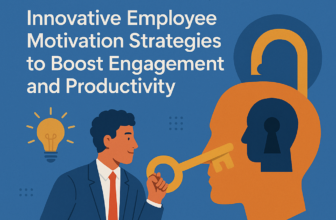
Unleashing Potential: Innovative Strategies to Boost Workplace Motivation
Introduction
Motivating employees to unleash their potential is crucial for sustaining organizational success. Workplace motivation encompasses the strategies and processes that individuals and organizations employ to drive performance and accountability. In this article, we explore innovative strategies to boost workplace motivation, backed by psychological principles and real-world case studies.
Section 1: Understanding Workplace Motivation
The Psychology of Motivation
The study of motivation is rooted in psychology, focusing on what drives individuals to act. Theories like Maslow's Hierarchy of Needs highlight the importance of fulfilling basic needs before progressing towards self-actualization. Understanding these theories allows employers to tailor motivational strategies that meet the diverse needs of their workforce.
Measuring Motivation
Regular assessments are vital for understanding employee motivation. Tools like surveys, one-on-one interviews, and performance metrics can reveal motivation levels and areas for improvement. Ensuring that employees feel heard through these measures can significantly enhance their commitment to the organization and its goals.
Section 2: Innovative Motivation Strategies
Goal Setting Interventions
Setting clear, actionable goals allows employees to focus and enhances their motivation. Using SMART (Specific, Measurable, Achievable, Relevant, Time-bound) goals encourages employees to envision their success concretely. This method, popularized by Locke and Latham, emphasizes that challenging yet achievable goals can lead to higher employee motivation and performance.
Recognition and Rewards
Recognition is a powerful motivator in the workplace. Organizations that implement formal recognition programs see a notable increase in employee engagement and satisfaction. Whether through monetary rewards, public acknowledgment, or simple expressions of gratitude, recognizing employee contributions can significantly boost morale.
Section 3: The Role of Leadership
Transformational Leadership
Transformational leaders inspire and motivate their teams by appealing to higher ideals and values. They foster a positive vision for the organization, which can increase employee commitment and motivation. This style of leadership is particularly effective in environments needing change and innovation.
Effective Communication
Open lines of communication facilitate trust and teamwork, which are critical for maintaining motivation within teams. Leaders should prioritize transparency and clarity in their communication methods, encouraging feedback and demonstrating that employee voices are valued.
Section 4: Organizational Culture and Environment
Creating a Positive Work Environment
A supportive work culture that promotes collaboration and respect is essential for employee motivation. Organizations should invest in creating safe and comfortable workspaces, ensuring resources are available to promote productivity and engagement.
Encouraging Employee Autonomy
Allowing employees the freedom to make choices significantly enhances their intrinsic motivation. Autonomy supports creativity and innovation, driving employees to take initiative and ownership of their work.
Section 5: Employee Engagement Programs
Team-Building Activities
Engaging employees through team-building activities fosters a sense of belonging and camaraderie. These activities can range from professional development workshops to fun outings, significantly enhancing motivation and workplace relationships.
Feedback Mechanisms
Implementing regular feedback mechanisms allows employees to understand how their contributions impact the organization. This can be achieved through performance reviews, peer evaluations, or anonymous surveys, creating an environment of growth and improvement.
Section 6: The Impact of Technology
Digital Engagement Tools
Using technology for engagement can lead to significant improvements in motivation levels. Platforms like Slack, Asana, or Microsoft Teams offer collaboration tools that enhance communication and streamline projects, making it easier for employees to connect and stay motivated.
Remote Work Considerations
The shift to remote work presents unique challenges and opportunities for motivation. Employers need to be proactive in maintaining their culture and communication strategies, ensuring that remote employees feel included and supported.
Section 7: Case Studies
Case Study: Google
Google has been cited as a leading example of fostering employee motivation through innovative workplace strategies. Their focus on employee well-being, creative freedom, and a flat organizational structure has led to high levels of motivation and job satisfaction.
Case Study: Zappos
Zappos emphasizes customer service as a core motivator for employee engagement. Their unique culture, focus on employee happiness, and willingness to invest in personal and professional development are key drivers of motivation at all levels of the organization.
Section 8: Additional Resources
Books on Workplace Motivation
- Drive: The Surprising Truth About What Motivates Us by Daniel H. Pink
- The 5 Languages of Appreciation in the Workplace by Gary Chapman and Paul White
Useful Websites and Articles
- Mind Tools – Training resources and tools for managers.
- Harvard Business Review – Insights on business management, including motivation.
Q&A Section
In this section, we address common questions surrounding workplace motivation.
FAQ Section
- What is the best way to measure employee motivation?
- How can I increase motivation in a remote work environment?
- What role does company culture play in workplace motivation?
- Can motivation strategies be applied in any industry?
- How can I implement effective recognition and rewards systems?
Resources
| Source | Description | Link |
|---|---|---|
| Mind Tools | Provides resources for managers to enhance their skills, including motivation techniques. | Visit |
| Harvard Business Review | Offers business insights, covering motivation and engagement in detail. | Visit |
| Gallup | Research on employee engagement and motivation statistics. | Visit |
| SHRM | Society for Human Resource Management provides best practices for workplace motivation. | Visit |
| Forbes | Articles and resources focusing on leadership and motivational strategies. | Visit |
Conclusion
Boosting workplace motivation is not a one-size-fits-all approach. By unleashing creative and innovative strategies tailored to individual and organizational needs, employers can enhance motivation, leading to increased productivity and job satisfaction. Implementing these methods is not just beneficial but essential for future workplace success.
Disclaimer
This article was created with assistance from artificial intelligence (AI) to enhance research and drafting efficiency. All content has been reviewed and refined by human contributors.